Enos Weswa

Digital Strategy Africa, AI for DevelopmentYouth Entrepreneurship, Market Access Innovation, Sustainable Job Creation

  • Tried and tested tool for Start-ups. Inspired by more than a decade of experience and conversations from a group of founders and mentors who are motivated to transform the
innovation ecosystem in Kenya and Africa
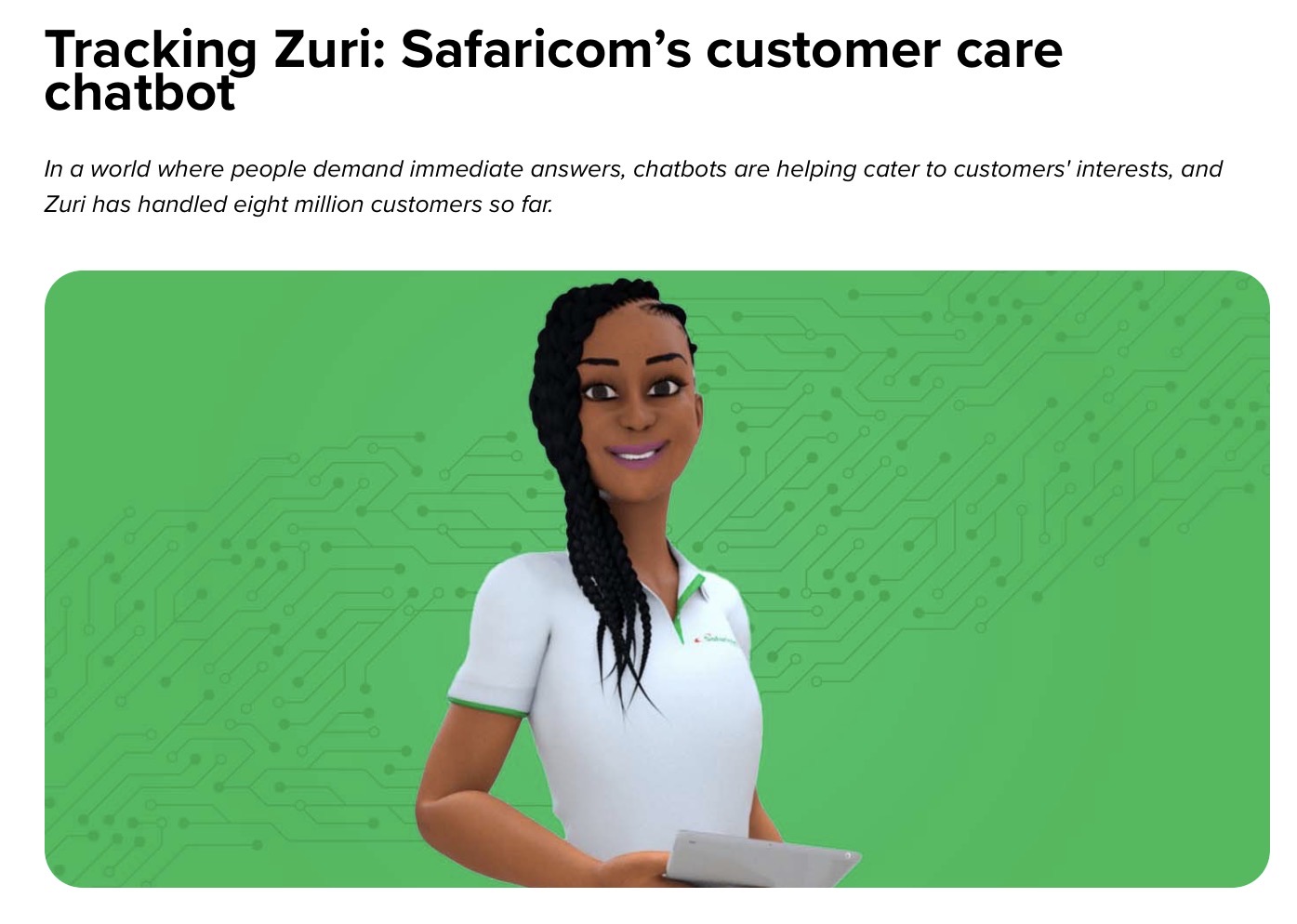
    Zuri, Safaricom’s AI chatbot, has assisted eight million customers, showcasing the evolving role of chatbots in customer service.

    Generative artificial intelligence (AI) has been rapidly adopted across multiple sectors as firms seek to automate customer service, streamline operations, and provide real-time digital support. As global institutions such as the OECD emphasise, AI now functions as both an economic enabler and a governance challenge, requiring responsible deployment, human oversight, and contextual adaptation (OECD, 2025). This essay critically examines how generative AI is being used in business by analysing its integration within service workflows, its operational limitations, and its ethical implications. The case of Safaricom’s Zuri chatbot is used as a practical focal point to illustrate the challenges and opportunities facing businesses implementing AI-enabled customer service systems in Kenya.

    Where AI Falls Short: Context, Human Language, and Escalation
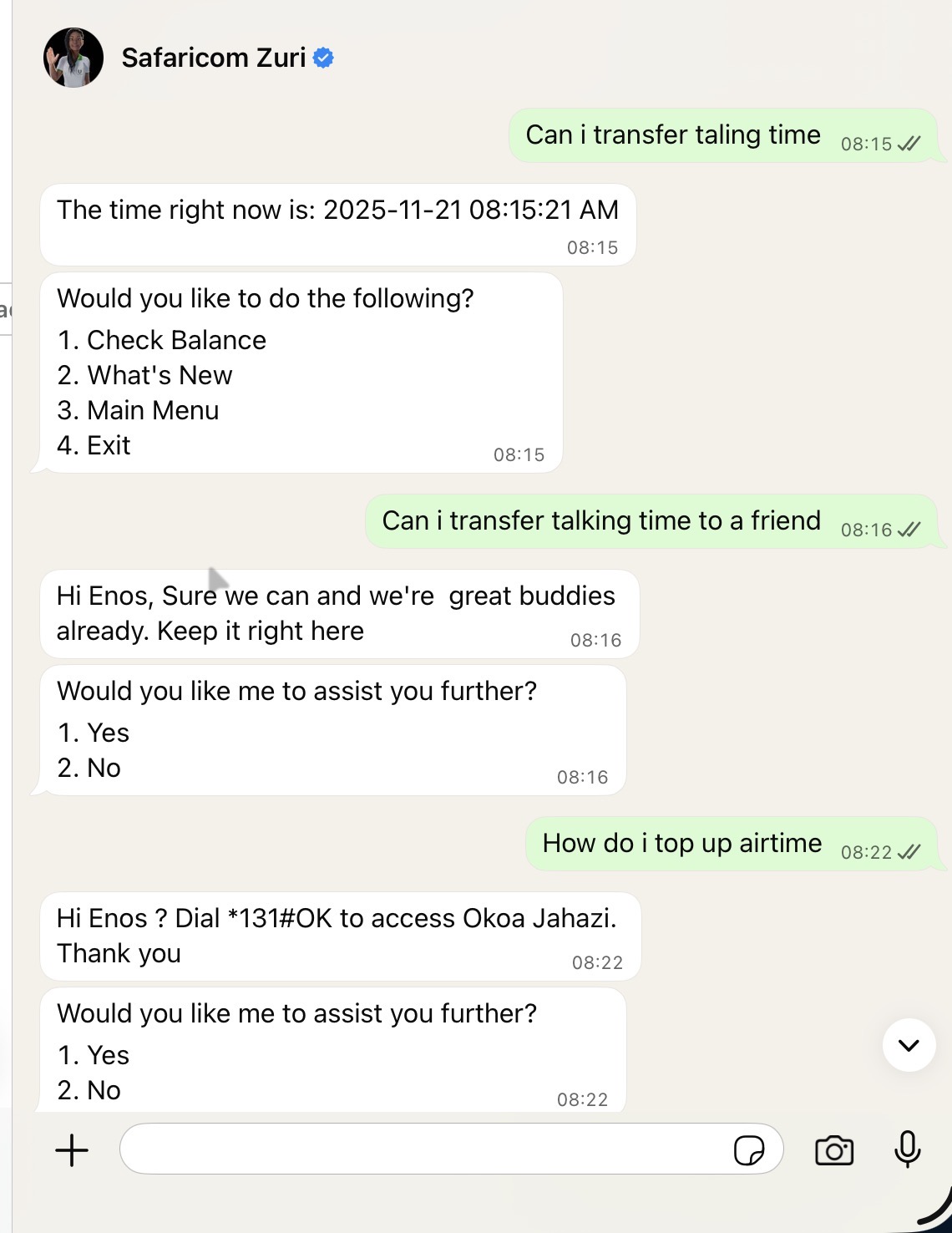
    Screenshot

    Safaricom’s Zuri chatbot is designed to automate common customer support tasks—including balance checks, PUK retrieval, bundle purchases, and menu-driven queries. In principle, this aligns with findings in the literature showing that chatbots are highly effective in tasks characterised by structure, repetition, and limited ambiguity (Dinath, Mashigo & Khumalo, 2025). However, my own interaction with Zuri highlights a much broader issue affecting rule-based and semi-automated chatbots. When asked a straightforward natural-language query—“Can I transfer talking time to a friend?”—Zuri repeatedly redirected me to an Okoa Jahazi service that was entirely unrelated to my question. This illustrates a widely documented problem in chatbot systems: difficulty recognising user intent when phrasing does not match predefined keywords or menu categories (Han, Du & Xu, 2025). Rather than engaging in contextual interpretation, the system loops through scripted responses, thereby creating user frustration and decreasing trust.
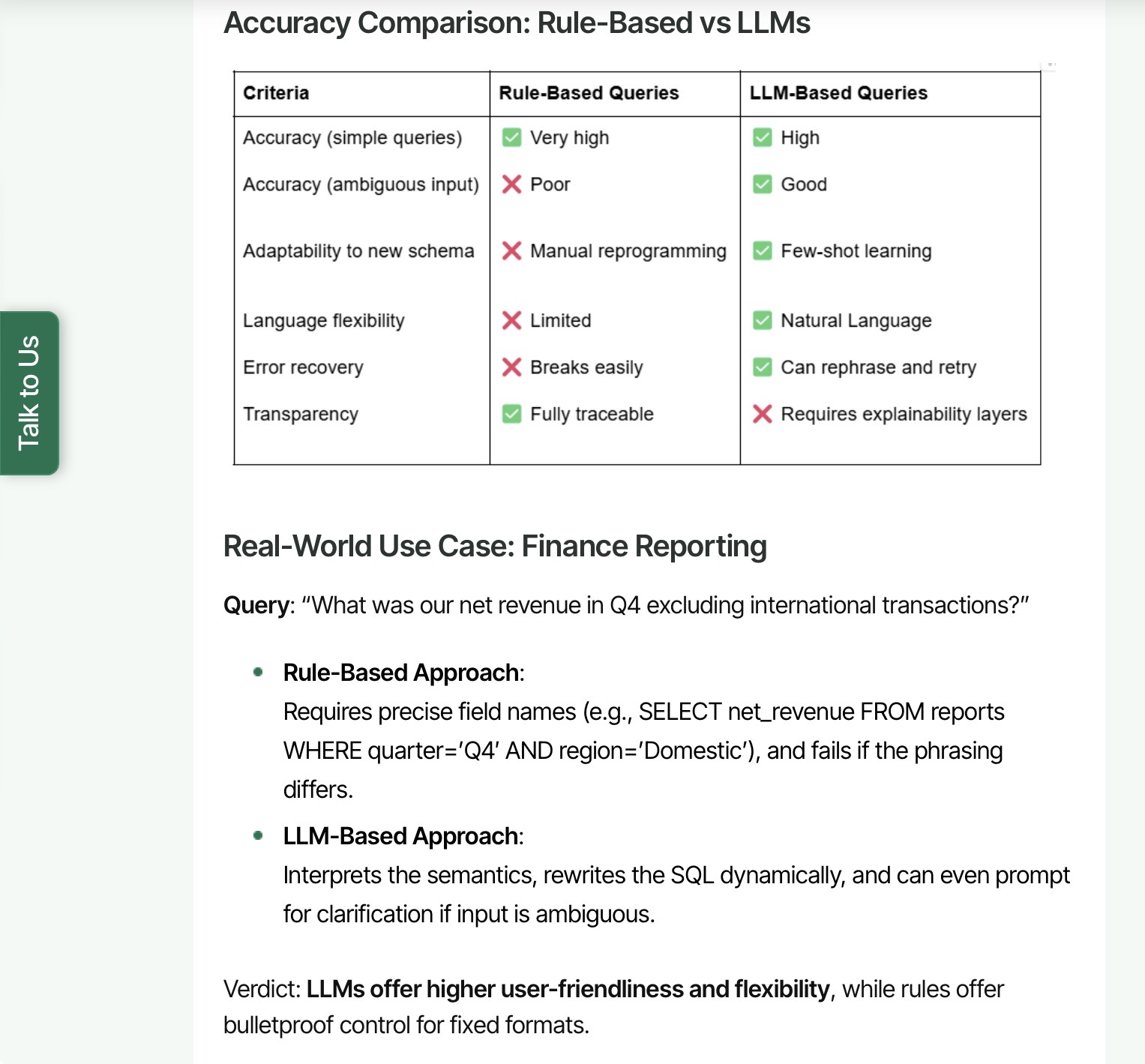
    https://yodaplus.com/blog/llm-vs-rule-based-queries/

    Understanding this failure requires clarity on the underlying technical model. Unlike advanced generative AI systems such as ChatGPT, which rely on large language models (LLMs) capable of interpreting free-form conversation, Zuri primarily employs a rule-based intent classification engine. Such engines follow fixed decision trees: if a user message contains a known keyword, the bot responds with a corresponding scripted action. As Dinath et al. (2025) show, rule-based chatbots exhibit near-perfect performance for structured queries but deteriorate significantly when handling multi-step or context-dependent tasks. In contrast, more advanced generative AI customer service engines—such as Google Dialogflow CX or IBM Watson Assistant—rely on natural language understanding (NLU) and dynamic intent matching, enabling them to infer meaning from varied phrasing and track context across multiple turns. The absence of such sophistication in Zuri explains both its mechanical responses and its failure to escalate unresolved queries to human agents, a flaw that further erodes trust (Glikson & Woolley, 2020).

    Zuri in the context of AI design principles

    Businesses typically integrate AI chatbots into their workflows through customer triage, transactional automation, knowledge retrieval, and analytics. In Safaricom’s case, Zuri is positioned as the first point of contact, intended to deflect high-volume requests from human call centre agents. This workflow is consistent with global patterns, where AI serves as the initial gatekeeper to reduce operational load (Tan et al., 2025). However, literature highlights that chatbot effectiveness requires two critical features: (1) contextual language adaptation, and (2) seamless hand-off to human agents (Følstad & Taylor, 2021). Kenya’s AI Strategy 2025–2030 similarly stresses the need to develop models grounded in local languages and user behaviour (Government of Kenya, 2023), while the UK National AI Strategy places strong emphasis on human–AI complementarity rather than substitution (UK Government, 2024). Zuri’s shortcomings illustrate what happens when these design principles are not adequately embedded in practice.

    Towards Ethical, Human-Centred AI Systems

    If businesses want AI to deliver value ethically and sustainably, a new design philosophy is needed. Evidence from both academia and consumer feedback suggests four ethical pillars:

    1. Accuracy First: AI must be continually retrained with real Kenyan language patterns—Sheng, Swahili-mix, informal phrasing—not textbook English. Without this, intent recognition will always misfire (Dinath et al., 2025).

    2. Human Escalation Must Be Built-In: Studies show that hybrid models—AI + human agents—produce the highest satisfaction levels and reduce abandonment rates (Følstad & Taylor, 2021). A “talk to human” button is not optional; it is ethical design.

    3. Transparency and Agency: Users should always know they are talking to a bot and should not be forced through loops. Ethical AI respects user autonomy (Glikson & Woolley, 2020).

    4. Contextual Performance Evaluation: Businesses must routinely analyse where AI excels (e.g., self‐service) and where humans must lead (e.g., emotional or high-risk cases) (Tan et al., 2025).

    Despite these failures, it is important to acknowledge that AI can perform exceptionally well in structured domains. For example, Safaricom’s AI-powered agricultural chatbot for potato farmers, recently reported in Business Daily, demonstrates strong performance due to its reliance on predictable agronomic workflows and structured data inputs. This contrast underscores a key point from the OECD (2025): AI excels where tasks are routine and data-rich, but struggles where interactions require human nuance, empathy, or flexible reasoning.

    Conclusion

    In conclusion, Zuri’s limitations are not isolated defects but reflect broader challenges associated with deploying rule-based AI in complex customer environments. While generative AI holds substantial potential for transforming business workflows, its successful implementation requires contextual language training, robust escalation mechanisms, human oversight, and alignment with national and international AI governance principles. Zuri therefore represents not merely a “lesson” but a cautionary illustration of the cost—both financial and reputational—of deploying under-equipped AI systems in high-stakes customer-facing scenarios. Businesses seeking to integrate generative AI must balance efficiency with trust, automation with empathy, and innovation with responsible governance.

    References

  • Tried and tested tool for Start-ups. Inspired by more than a decade of experience and conversations from a group of founders and mentors who are motivated to transform the
innovation ecosystem in Kenya and Africa

    Academic Paper Title: Optimization of Sports Good Recycling Management System Based on Internet of Things

    Authors: Panhong Ren, Mengjian Nie, and Hui Ming

    Journal: Wireless Communications and Mobile Computing

    Year: 2021

    Introduction

    This critique evaluates the article Optimization of Sports Good Recycling Management System Based on Internet of Things by Ren, Nie and Ming (2021), published in Wireless Communications and Mobile Computing. The purpose is to summarise the paper’s central argument and apply the Salford Business School “What the Papers Say – Analysis Pro Forma” to assess its research quality, methods and presentation. The critique distinguishes clearly between the authors’ claims and my analytical interpretation, ensuring the reader can understand the contribution and limitations without consulting the paper. 

    Summary of the Paper

    The article aims to design and optimise an IoT-enabled recycling management system for sports goods. The authors analyse the recycling logistics process, storage points, transportation nodes and operational bottlenecks, before proposing an IoT-driven information platform integrating sensing, data transmission, cloud processing and optimisation algorithms. The research objective is to improve traceability, reduce labour-intensive management, strengthen information flow and enhance logistics coordination across recycling nodes. The authors implement a prototype platform, including RFID sensing, vehicle scheduling optimisation and an image-based classification module using a simplified LeNet-5 model. Reported results show improvements in monitoring, sorting accuracy and route optimisation, leading the authors to conclude that IoT technologies are effective in addressing sports-goods recycling inefficiencies (Ren, Nie & Ming 2021). 

    Quality of the Research

    1. Clarity of the Research Question

    The research question—how IoT can optimise sports-goods recycling management—is clearly stated throughout the introduction and framework description (Ren, Nie & Ming 2021). 

    2. Importance and Relevance

    The topic is relevant given global emphasis on circular-economy systems and increasing adoption of IoT in logistics. Prior work cited in the paper also highlights the importance of IoT-enabled waste management (e.g., Saha et al. 2017; Mahmood & Zubairi 2019).

    3. Originality

    The application to sports-goods recycling is novel. Although IoT in waste management is well documented, the sports-goods sub-sector remains under explored, lending originality to the authors’ contribution.

    4. Background Research

    The literature review covers IoT sensing, logistics, network modelling and resource recovery. While it demonstrates breadth, the review is descriptive and doesn’t critically synthesise the gaps the paper aims to address. There is limited engagement with sustainability theory, reverse-logistics frameworks or behavioural aspects of product return.

    5. Ethical Considerations

    The paper does not adequately address ethical issues such as data privacy, consumer tracking or the environmental cost of IoT hardware—an important omission for research involving sensor networks and cloud data.

    The Research Method

    Method Summary

    The authors use a systems-design approach: mapping recycling processes, proposing an IoT architecture, building an information platform and testing modules such as image classification and path optimisation (Ren, Nie & Ming 2021). 

    Appropriateness

    The design-science approach suits the engineering nature of the question. However, the method lacks detail regarding sampling, testing environments, datasets, evaluation metrics and validation procedures.

    Adequacy of Description

    Technical components—RFID, cloud architecture, neural-network configuration—are thoroughly described. Yet the operational testing context (e.g., live trials, controlled simulations) is missing, making it difficult to confirm practical effectiveness.

    Correctness of Analysis

    Algorithm comparisons (e.g., genetic algorithm vs distance-first algorithm) are plausible, though results are presented without statistical justification.

    Support for Conclusions

    The conclusions are optimistic but not fully supported by rigorous empirical evidence. The prototype shows potential, but generalisability is limited.

    Quality of Presentation

    The paper is clearly structured and uses diagrams well (e.g., recycling network diagrams on pages 3–4, platform architecture on page 7). However, narrative flow is dense, and some sections—especially the optimisation algorithms—could benefit from clearer explanation and abstraction. Definitions of key terms such as “returned good flow” or “cloud model theory” are brief and require additional elaboration.

    Conclusion

    The article aligns with module themes such as IoT architectures, digital transformation of logistics, and circular-economy design. It would benefit from stronger integration with IS theories such as socio-technical systems or process-innovation models to extend its contribution beyond engineering design.

    Reference.

    Ren, P., Nie, M., & Ming, H. (2021). Optimization of Sports Good Recycling Management System Based on Internet of Things. Wireless Communications and Mobile Computing.

    Basden, A. (2009). Critical Management Perspectives on Information Systems. Taylor & Francis. 

    McKeown, N. & Durkin, M. (2017). The Seven Principles of Digital Business Strategy. Business Expert Press. 

    McKeown, N. & Durkin, M. (2017). Digital Business Strategy (Chapter 1). Business Expert Press. 

    Perkin, N. & Abraham, P. (2017). Building the Agile Business Through Digital Transformation. Kogan Page. 

    Stahl, B. C. (2008). Information Systems: Critical Perspectives. Taylor & Francis. 

  • Tried and tested tool for Start-ups. Inspired by more than a decade of experience and conversations from a group of founders and mentors who are motivated to transform the
innovation ecosystem in Kenya and Africa

    Introduction: The Rise of AI in Kenyan Customer Service

    In recent years, artificial intelligence (AI) chatbots have become increasingly common in Kenya’s customer service landscape. Many users interacting with banks, telecommunications providers, or e-commerce companies now receive initial support from digital assistants such as Safaricom’s Zuri, Absa’s Abby, or KCB’s Bajaji. The rapid adoption of AI in customer support is driven by a combination of rising operational costs, changing consumer expectations, and the growth of digital commerce. Kenya’s digital economy, built around widespread mobile money usage and online marketplaces, generates high volumes of customer inquiries that require efficient response systems (Communications Authority of Kenya, 2023). AI chatbots offer 24/7 availability, instant responses, and consistent service delivery, making them particularly valuable for businesses operating in fast-paced environments.

    Why Startups Are Turning to Chatbots

    Kenyan startups typically operate in high-growth but resource-constrained contexts. Hiring and maintaining large customer support teams is expensive and often unsustainable in early business stages. AI chatbots automate repetitive and predictable inquiries, allowing businesses to allocate human capacity to more complex, sensitive, or revenue-generating interactions. Research shows that automation reduces customer support workload significantly by handling routine questions (Huang and Rust, 2021). In practice, platforms such as KCB’s Bajaji and Safaricom’s Zuri now manage day-to-day inquiries including account access and service navigation. Meanwhile, small businesses selling via WhatsApp or Instagram often rely on tools such as Meta Business Suite and Tidio to maintain responsiveness. This trend is particularly visible in innovation hubs such as EldoHub and LakeHub, where founders report that customers prefer WhatsApp as their primary communication channel. Kenya’s commercial culture is therefore shaped by messaging-based interactions, making chatbot integration intuitively aligned with consumer behavior (FSD Kenya, 2022).

    Benefits of AI-Driven Customer Support

    AI-driven customer support offers several advantages. First, chatbots provide speed. Modern consumers, particularly those in digital marketplaces, expect immediate support and are less tolerant of delays (Accenture, 2020). Second, chatbots reduce operational costs by minimizing the need to scale call centres and customer-facing staff. This makes customer service more financially sustainable as startups grow. Third, chatbots enable scalability by handling thousands of simultaneous inquiries without affecting service quality. Fourth, AI systems generate valuable insights from conversation patterns, enabling businesses to make data-informed decisions on customer needs and product improvement (Baptista and Oliveira, 2022). A business that previously required ten support agents may operate effectively with three, complemented by automated systems.

    Challenges and Limitations in the Kenyan Context

    Despite clear advantages, chatbots face limitations. Many AI systems struggle to understand Kiswahili, Sheng, colloquial phrasing, and cultural tone. Emotional nuance and contextual judgment still require human interpretation (Shen et al., 2023). As a result, customers often request to speak to a human when conversations become complex or sensitive. Moreover, trust remains a key factor in service interactions in Kenya, and some customers perceive automated responses as impersonal. However, Kenyan AI developers such as Botlab Africa and Ongair are working on localized models that better reflect regional language patterns and communication norms, suggesting that chatbot performance will continue to improve.

    The Future: Human and AI Working Together

    The future of customer support in Kenya is not a replacement of humans by AI, but a hybrid model where machines handle routine interactions and humans manage empathy, negotiation, and relationship building. Customer service roles are shifting toward advisory and community relationship functions. For startups, the recommended approach involves identifying common customer queries, selecting an appropriate chatbot platform, training the AI using real conversation history, and maintaining human escalation channels. The goal is to let technology handle scale while humans handle care.

    Reference

    Accenture (2020) AI and Human Experience in Customer Service. Accenture Research Report.

    Baptista, G. and Oliveira, T. (2022) ‘Digital transformation and customer experience: A systematic review’, Journal of Business Research, 146, pp. 140–160.

    Communications Authority of Kenya (2023) Sector Statistics Report 2022/2023. Nairobi: CAK.

    FSD Kenya (2022) Digital Commerce and Financial Inclusion in Kenya. Nairobi: FSD Kenya.

    Huang, M. and Rust, R. (2021) ‘A strategic framework for artificial intelligence in marketing’, Journal of the Academy of Marketing Science, 49(1), pp. 30–50.

    Shen, H., Li, X. and Wang, J. (2023) ‘Human–AI interaction in service delivery: Emotional and linguistic challenges’, Service Science, 15(2), pp. 101–115.

  • Tried and tested tool for Start-ups. Inspired by more than a decade of experience and conversations from a group of founders and mentors who are motivated to transform the
innovation ecosystem in Kenya and Africa

    Introduction

    Cloud computing has reshaped how digital solutions are designed, deployed, and maintained, especially within emerging markets where resources and technical capacity are constrained. Before cloud adoption, many startups relied on labour-intensive customised software development, meaning the provider had to build and maintain separate versions of the system for each client. This required manual installation, one-on-one configuration, onsite troubleshooting, and repeated updates for each deployment—processes that consumed significant time and technical labour (Marston et al., 2011). In contrast, Software-as-a-Service (SaaS) allows a single cloud-hosted system to serve many organisations at once. Updates, security patches, and improvements are applied centrally, eliminating the maintenance burden associated with fragmented installations. Clarifying this distinction is essential to understanding WorkPay’s evolution: the transformation was not merely commercial, but fundamentally an Information Systems redesign from isolated bespoke systems to a unified cloud platform.

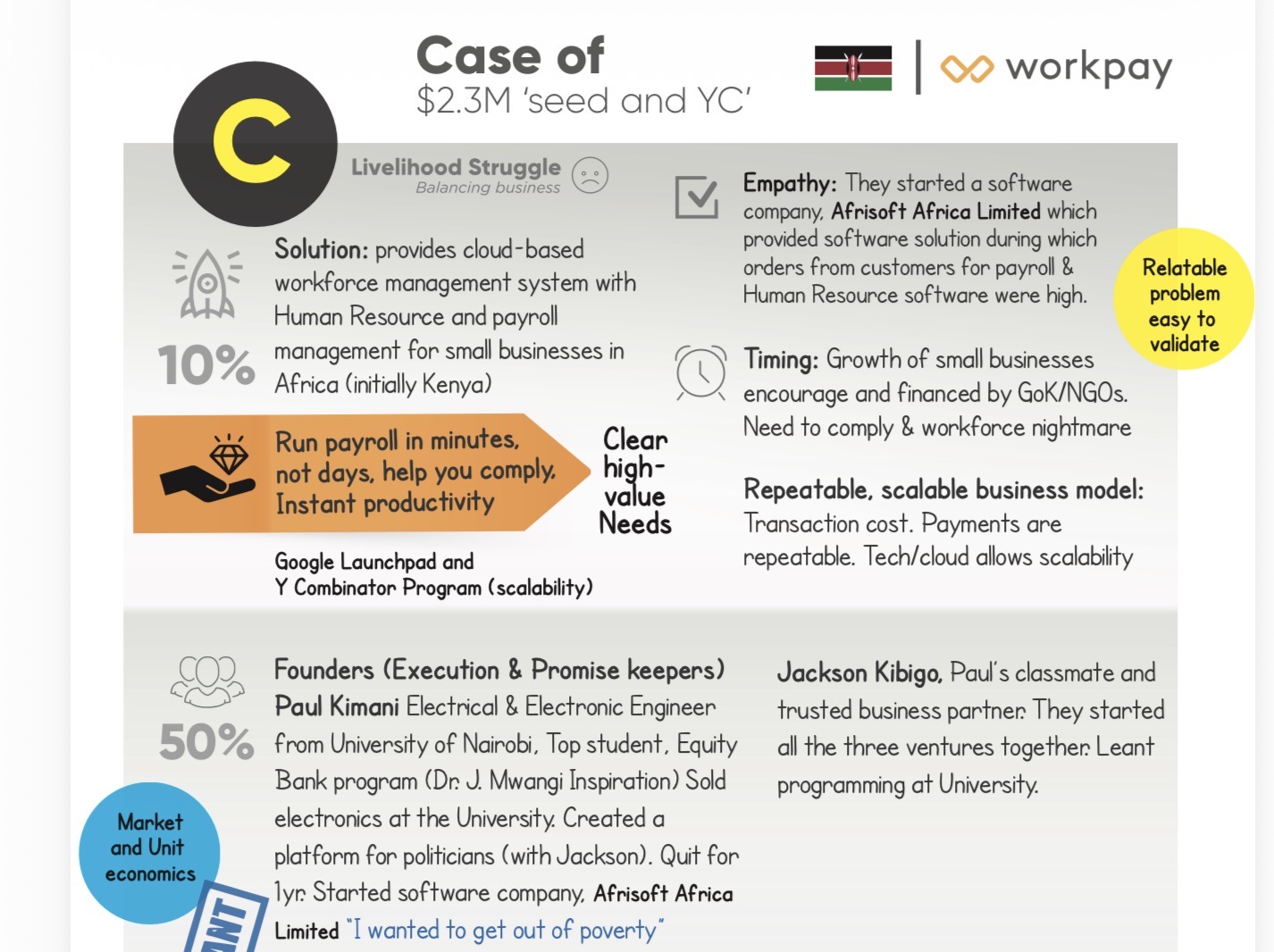
    Screenshot: Startup Playbook (www.startupsavanna.org)
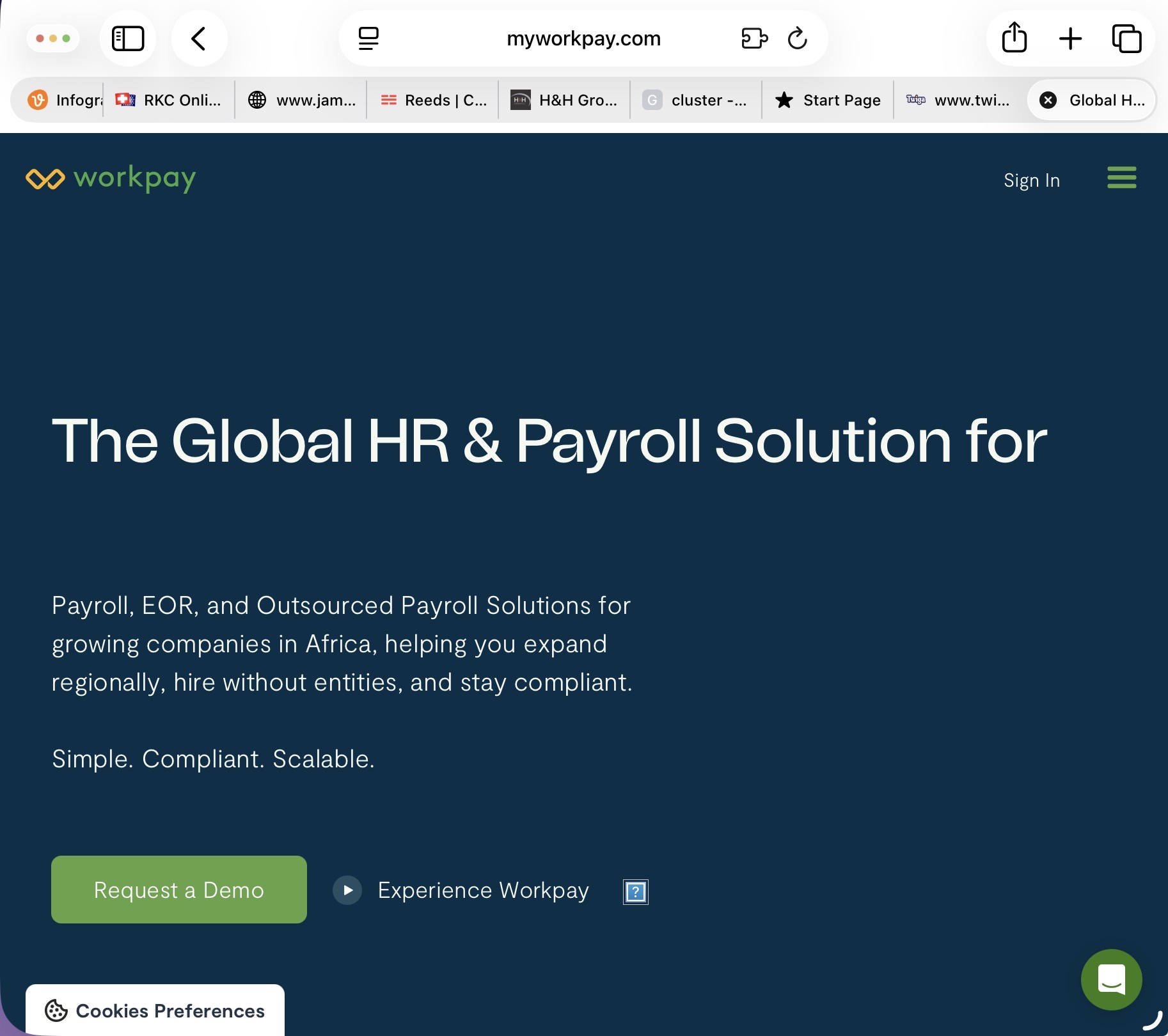
    Screenshot: https://www.myworkpay.com


    From Software Services to Recognising Recurring Needs

    WorkPay, founded in 2017, initially operated as a software services provider, building individual payroll systems for clients across Kenya. Each implementation required fresh configuration, separate databases, manual updates, and direct client support. Over time, however, the WorkPay team recognised that most clients faced remarkably similar HR and compliance challenges—ranging from salary schedules and attendance tracking to payroll taxes and statutory submissions. This recognition of recurring needs on the provider’s side, rather than differences in customer demand, highlighted an opportunity for product standardisation. As Co-Founder Paul Kimani explained, “We realised we were solving the same payroll and compliance problems again and again… the solution needed to be standardized and cloud based” (Kimani, 2020). This aligns with Teece’s (2018) view that scalable digital business models emerge when firms identify patterns of repeatable needs and design shared systems capable of serving many customers simultaneously.

    Cloud Computing as the Scaling Infrastructure

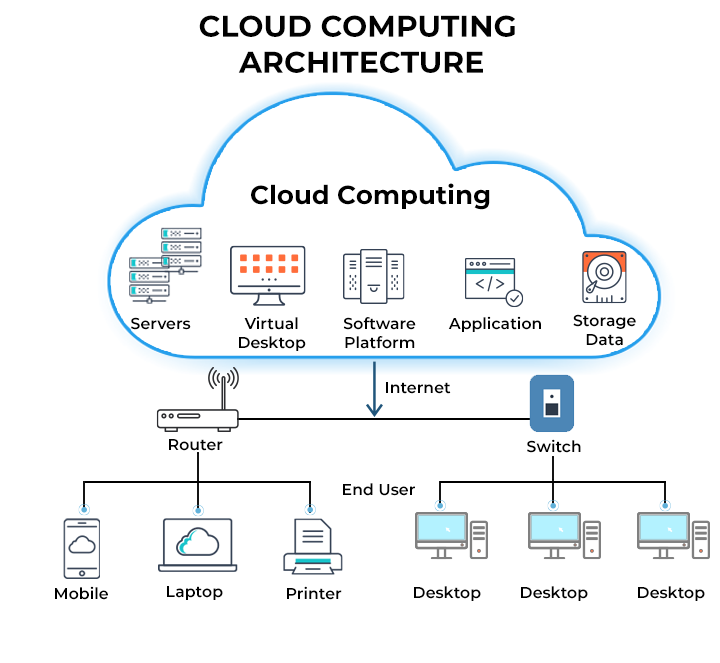
    The transition to a cloud-native architecture enabled WorkPay to consolidate individual client deployments into a multi-tenant SaaS platform. Cloud computing offered several key advantages. First, it allowed centralized hosting and data management, ensuring compliance with regulatory and security requirements across different markets. Second, it enabled automatic software updates, meaning improvements could be deployed to all clients simultaneously without manual intervention. Third, the pay-as-you-grow nature of cloud infrastructure reduced upfront capital expenditure and allowed the company to scale efficiently alongside customer demand (Armbrust et al., 2010).

    Transitioning to a cloud-native, multi-tenant architecture enabled WorkPay to consolidate all clients into a single, centrally maintained system. Cloud infrastructure provided automatic updates, real-time security enhancement, scalability across markets, and reduced deployment time (Armbrust et al., 2010). These changes also eliminated the labour-intensive processes associated with custom deployments, replacing them with automated workflows and centralised system administration.

    Business Model Shift and Recurring Revenue Growth

    To demonstrate deeper understanding of information systems, it is important to show how the cloud platform integrates into customers’ operational processes. Businesses use WorkPay’s system to create and manage employee records, automate payroll calculations, process statutory deductions (such as PAYE, NHIF, and NSSF), and generate payslips. The platform incorporates multi-level access controls so HR managers, payroll officers, and supervisors can approve workflows digitally. Attendance data is captured through mobile check-ins, reducing manual entry errors and supporting decentralised teams. WorkPay’s APIs integrate with banks and mobile money platforms like M-Pesa, automating bulk salary payments and eliminating manual uploads. The platform also provides real-time compliance updates so tax rates, statutory rules, and reporting formats reflect current regulations. All these functions illustrate how cloud computing enables process automation, data centralisation, and decision support, which are core themes in Information Systems.

    Platformization and Strategic Expansion

    WorkPay’s transformation also enhanced system reliability and data integrity. Unlike custom systems—where each installation could drift based on client-specific changes—the cloud-based SaaS model ensures all users operate on the same version, with consistent data structures and reporting standards. Cloud storage increases auditability, and real-time data availability supports organisational transparency and managerial decision-making (Petrakaki et al., 2018). Cloud computing also improved WorkPay’s capacity for incremental innovation: new modules for benefits management, payments, compliance dashboards, and HR workflows were added without requiring clients to reinstall or rebuild systems (Disrupt Africa, 2021).

    Conclusion:

    Overall, the WorkPay case illustrates how cloud computing can fundamentally reshape the design, maintenance, and organisational integration of digital systems in emerging markets. The shift from bespoke software to a multi-tenant SaaS platform eliminated labour-intensive service delivery, improved data consistency, strengthened compliance mechanisms, and enabled seamless integration into customer HR and payroll processes. Rather than framing this transformation solely as a business model shift, the case demonstrates how cloud-native Information Systems enable scalable digital services, support process automation, and enhance decision-making across organisations. For African startups seeking sustainable scale, cloud adoption represents not only a technical upgrade but a critical redesign of how information systems are built, delivered, and integrated into organisational workflows.

    References

    • Armbrust, M. et al. (2010) ‘A View of Cloud Computing’, Communications of the ACM, 53(4), pp. 50–58.
    • Disrupt Africa (2021) ‘Kenyan HR startup WorkPay expands across Africa’. Available at: https://disrupt-africa.com
    • Marston, S. et al. (2011) ‘Cloud Computing — The Business Perspective’, Decision Support Systems, 51(1), pp. 176–189.
    • Ndiwalana, A. and Tusubira, F. (2018) ‘Software Business Models in Emerging Markets’, African Journal of ICT.
    • Petrakaki, D., Cornford, T. and Klecun, E. (2018) ‘SaaS and Digital Workflows in Organizations’, Information Systems Journal.
    • TechCrunch (2020) ‘Kenyan startup WorkPay raises $2.1M to scale African payroll’. Available at: https://techcrunch.com
    • Teece, D. J. (2018) ‘Business Models and Value Capture’, Long Range Planning.
    • The Africa Report (2023) ‘Payroll startup WorkPay eyes Francophone Africa expansion’. Available at: https://www.theafricareport.com
    • VentureBurn (2020) ‘WorkPay raises seed capital to scale HR and payroll solution across Africa’. Available at: https://ventureburn.com

  • Tried and tested tool for Start-ups. Inspired by more than a decade of experience and conversations from a group of founders and mentors who are motivated to transform the
innovation ecosystem in Kenya and Africa

    By Enos Weswa | African Startup Ecosystem | Digital Transformation Africa

    In today’s rapidly evolving business landscape, the African startup ecosystem is experiencing unprecedented growth. Across the continent, innovators are solving pressing challenges in agriculture, fintech, health, and the creative economy. Yet, one of the biggest barriers to scale remains market access—a challenge that often prevents promising ventures from moving from local pilots to sustainable regional or global businesses.

    This is where digital market linkages are rewriting the growth playbook. By leveraging digital transformation tools, startups are finding new pathways to scale, attract investment, and create sustainable jobs.

    Why Digital Market Linkages Matter

    Market linkage is more than just connecting buyers and sellers. It’s about building ecosystems where entrepreneurs, investors, governments, and development partners can collaborate seamlessly. In Africa, where markets are often fragmented and infrastructure is uneven, digital platforms are enabling startups to overcome structural barriers.

    When a startup has the right digital ecosystem in place—integrated websites, social commerce tools, e-marketplace access, and strong backlinks—it significantly improves its chances of being visible to the right customers and investors.

    For example, programs like the UK-Kenya Tech Hub’s Soko Plug have shown that micro, small, and medium enterprises (MSMEs) that digitize their offerings are able to reach new markets faster, reduce overhead costs, and build stronger brands.

    The Market Access toolkit: A Blueprint for Scale

    Another initiative that has shaped my work is the Market Access toolkit designed with FCDO’s East Africa Research and Innovation Hub. The Playbook consolidates lessons from startups that successfully scaled and provides a regulatory and policy checklist for growth.

    One of the strongest insights from the Playbook is the importance of search engine visibility. Startups that actively optimise their digital presence—through keyword strategies, blog posts, backlinks, and showcasing flagship projects—are more likely to attract funding and partnerships.

    As I reflect on my own professional journey, I’ve seen the direct impact of this principle.

  • Tried and tested tool for Start-ups. Inspired by more than a decade of experience and conversations from a group of founders and mentors who are motivated to transform the
innovation ecosystem in Kenya and Africa

    Introduction

    Web 2.0 in enabling two-way communication and multimedia sharing. This powers the social media platforms that proved to be an integral part of the 21st century communication, social interaction, professional interaction, accessing news and gossip and for entertainment. Ranging from sharing of music, videos, photos, short messages in a one on one or one to many channels. With a level of personalization that enable to have social brand, capital and social footprints.

    Search engine tools especially google, and YouTube have become an important and everyday tool for accessing online information. Because of that most social media were optimised for search enabling the search engine to display social media footprint of a given search. With innovative business model from google pay per click came up enabling advertisers only for keywords as well as google enhancing the search algorithm to display search results based on keywords, optimisation and backlinks.

    Covid influence necessity is the mother of invention, innovation in remote working, virtual working, with use of digital technology and innovation to create tools with better experience for remote working. Creating new jobs and making online a very important space of learning, interactions and recruiting.

    From many the social media platform that were powered by the above trends, LinkedIn stands out as the most used and sorted for, for recruitment since it contains professional digital footprint of over 1.1 billion members and about 16m active users in Africa, 113.5m monthly active users in the USA. One powerful trend of digital is that it can be tracked and measured

    Post covid fully embraced the new normal with challenges of going back to the office. Hybrid working became the new normal. These trends have shaped the way recruitment is being done. I personally had to conduct a recruitment exercise virtually, an experience that wasn’t new but had a lot of learning.

    We have a phrase the internet never forgets, the personal digital footprints have become increasingly important for job recruitment process

    Search Engine results page

    Keywords

    Links

    Of course, not all links are equal. While link volume is the number of links coming to a specific page of your site, link authority looks at the value of the links. Some sites are more trusted than others. Likewise, some sites are more relevant than others to specific terms. The more relevant a site, the more value is transferred by the link. It is more important than ever to avoid your website being associated with spammy links of any kind. ‘Quality’ links are better than a high ‘quantity’ of ‘poor-quality’ links.

    Well-known and established news sites, government sites (.gov), and university domains (.ac) are examples of sites from which links can carry more weighting.

    Sites with higher authority carry more link weight.

    Knowledge panel

    Followers

    Engagement rate

    Trends in topics, themes, subject matter

    Analysis

    Using myself as a buyer persona, the analysis was to find out my SWOT analysis and competitor analysis as well as influencer analysis to come up with practicle insights of enhancing my profile for job recruitment.

    Competitors Analysis

    The 10 competitors were mostly drawn from the ecosystem, described in four dimention, job title, area of competancy, sector/ field/domain and experince. I competitors with the following criteria competitors with greater following than mine, greater engagement, greater search engine result page and with a position that I would love to apply for. From the analysis we shared same motivation, vision and goals with most of them having greater achievement and not necessarily experince. We analysed competitors three social media chanel with Linked in being the primary channel. The ratinale for choosing linked in is better described in a study by, positioning it as the most prefered channel for recruiting. First each names were searched on google to compare and contrast the google search engine results page SERP and see the optimization as well as high links. This was also instrumental to assertain the social media platforms they are in and blog or website that they have. We went ahead to do analysis of the social media. It was evident that all profiles reflected the importance and the prioritization of linked in for career development since all of them had strong linked in presence. It was also evident that those that had website or blogs had much greater linked in inlunce and much greater engagement on linkedin underpining the fact that they were deliberate in the efforts of optimizing their profiles. We conducted a keyword research based on the profile to gather insights on the important keywords related to the sector/field or domain as well as

    10 competitors

    After analysisng the 10 competitors I ranked them with the scores per attribute and narrowed down to two who had a higher score on the keyword, engagement rate, followers, websites and one had a knowledge panel from the google search. They also appeared on more page results on google. I analysed their websites interms of keywords and backlinks. I used google keyword planner, SEMRUSH.

    I went ahead to use Resume Worded to analyse their linked in accounts and gathered insights on the keywords as well as backlinks

    Keyword analysis

    Linkedin Analysis

    Website analysis, back link analysis

    Linkedin improvement

    Influencer Analysis

    3 influencers, 1 human resources expert in a development organisation/government agency and two recruitment firm were analysed to gain insights on recruiting trends and created an influencer persona, that captures the motivation, and critical information they look for for recruiting. The other layer was to draw a uniformity in the organisational, need, goals and how they align with the selection criteria. As well as learn the neuances that existas when it comes to talent acquisition, retention and development of this organisation. This was to support the aspect of profile development that would increases the chances of the organisations selecting. Additionally we searched on search engine to gather insights on recruiting trends. We learnt that the trends and insights analysed from the influencers had similarity with the trends from some reputable sites and study. These trends we very key in adding and aligning with the keywords developed from the competitor analysis.

    Deeksha PuniaDirector, People Management
    Hellen Maruti Kong’ong’o, HRBPDirector Human Resource & Talent Management
    Ruth M.People Operations | Global Talent Acquisition | Tech Recruitment |  Talent Management | Team Leadership |

    Recruitment Trends Analysis

    As per Workforce Africa https://talentpeo.com/2025/04/25/hiring-trends-in-africa-2025/?utm_source Workforce Africa on  LinkedIn “Job-Hunting Trends in Africa 2025”  Actionable insights for hiring leaders:

    • Remote/hybrid work is now a staple, especially in tech, marketing, and finance
    • Growing use of AI-powered Applicant Tracking Systems (ATS)—CVs must be ATS-friendly
    • Hiring is increasingly skills-based, over formal degrees, with soft skills (adaptability, emotional intelligence) in high demand
    • Green jobs and sustainability roles are emerging strongly due to rising climate and environmental awareness

    According to Talent PEO Africa https://www.linkedin.com/pulse/job-hunting-africa-trends-watch-2025-workforce-africake-j5rvf/ Hiring Trends in Africa 2025: Key Insights for Employers Q1 2025 snapshot with granular insights:

    • Regional hotspots: South Sudan (+64% employer interest), Nigeria (+47% mid-senior placements), Kenya (+52% cross-border & remote hiring)
    • Sector-wise growth: Tech, financial services, energy & renewables, healthcare & NGOs, legal & compliance
    • Highlights challenges of multi-country hiring and the utility of EOR (Employer of Record) solutions for compliant hiring across African markets

    3 Social media the three. From the initial assesment from the competitor analysis we established an order of priority and importance of the social media that recruitors used and compeitors use to build their profile for recruitment. Linkedin came in first which reflect the study by which gives evidence on why its important. This was followed by X (formally twitter) with strong bias on following current news and redirecting audinces to main articles. Virality was also a factor that supportet the x use. It was important to note a key strategy of using the soacila media and blog was the idea of growing links using sharable content. The last social media to add was intagram since majority of the young population do share graphical and video content with ease and has a higher on the go content cosumption with very few text.

    From the analysis we adopted an important structure from Digital and Social Media Marketing : A Results-Driven Approach The three key sub-strategy of Digital marketing Channels, content and data. Our profile mimicked the buyer persona to be reached by the recruiting agency or head hunting organisation or online recruiting agency  and was enhanced by the competitor analysis, the ten competitors represented the those who would compete for the same buyers (jobs) as us and the influencers represented a buyer persona (recruiters and HR in organisations that will offer us the job) Key question on Buyer persona were what channels to the use, what do they consider what recruiting. What content keywords are they drawn to when head hunting. Other than the qualifications what other aspect do they consider. Given the reliant on soacila media platform for recruiting the case by…. what trends and data do the follow and unpack.

    The indepth analysis pointed us to one of the most optimised competitor. The competitor validated the fact that his optimization was not an acciednt but a deliberate effort to grow their findability, it validated the reason of them having a website. and to solidfy their reputation as a voice of reason and opinion moulder in the field. We went ahead a did an indepth analysis of the website to understand the optimization for findability as well as strengthening their online brand.

    Profile ElementEnos Masinde WeswaDr. Tonny OmwansaAmine IDRISS A. Karama
    PositioningStartup Ecosystem Builder & ConnectorInnovation Policy Leader & AcademicContinental Infrastructure & Integration Strategist
    StrengthHands-on Startup Mentorship & Design ThinkingPolicy Influence & Innovation GovernanceHigh-Level Program Execution & Partnerships
    Digital Presence StrengthActive LinkedIn ProfileStrong Institutional ProfileProfile on LinkedIn, but weak personal brand content
    Content GapsLacks academic publications & a personal blogNeeds more personal thought leadership contentNeeds integration between his blog and professional platforms
    Engagement Frequency (Social Media)Medium (ecosystem events & updates)Low to Medium (policy events, few posts)Low (institutional focus, minimal personal interaction)
    Influence LevelNational (Kenya-focused)National & Regional (East Africa)Continental (Africa-wide policy influence)
    Competitor NameStrengthsWeaknessesOpportunitiesThreats
    Enos Masinde Weswa– Hands-on startup mentorship & design thinking expertise- Strong ecosystem connector- Active LinkedIn presence- Multi-sector experience (Tech, Creative, Academia)– Limited academic publications- Lacks a personal blog/website for thought leadership- Lesser visibility in policy-making circles– Develop a personal branded blog focusing on startup scaling stories- Increase frequency of thought leadership posts (LinkedIn Articles, Medium)- Collaborate with influencers to amplify reach– Highly visible ecosystem leaders overshadowing in policy influence- Limited visibility in regional/global platforms
    Dr. Tonny K. Omwansa– Key policy influencer & innovation governance expert- Founder of Kenya Innovation Week & CEIL Summit- Published academic researcher- Global institutional networks (MIT, Mastercard)– Limited personal content (blogs, vlogs)- Engagement frequency on social platforms is low- Niche focus on policy & academia– Amplify personal brand through regular LinkedIn thought pieces- Launch a personal website/blog narrating policy impact stories- Engage more in startup ecosystem conversations– Risk of being viewed as bureaucratic- Competitors with stronger grassroots & digital presence may outpace public engagement
    Amine IDRISS A. Karama– Pan-African policy & infrastructure leader- Multi-lingual (English, French, Arabic)- Deep experience in continental programs (PIDA, AfCFTA)- Publications & thought pieces on development economics– Low digital personal brand visibility- Sparse engagement on LinkedIn & blog not fully utilized- Less presence in startup incubation narratives– Build a robust thought leadership presence via LinkedIn articles in multiple languages- Leverage AUDA-NEPAD platform to create personal “insider series” blog- Position as Africa’s voice on sustainable infrastructure financing– Could be perceived as “too institutional”- Less appeal to younger digital-native startup communities without storytelling personalization

    Recruitment trends

    Digital and Social Media Marketing: A Results-Driven Approach, edited by Aleksej Heinze, et al., Taylor & Francis Group, 2016

    References

    Barbeisch, V. E. (2025). A theoretical and empirical adaptation of signaling theory for digital communication: Examining organizational brand identity and credibility (Doctoral dissertation, University at Albany, State University of New York). Scholars Archive. https://scholarsarchive.library.albany.edu/etd/133

    Bronstein, J. (2013). Personal blogs as online presences on the internet: Exploring self-presentation and self-disclosure in blogging. Aslib Proceedings, 65(2), 161–181. https://doi.org/10.1108/00012531311313989

    Chalakudi, S. N., Hussain, D., Bharathy, G., & Kolluru, D. M. (2024). Experts-driven design: A framework for measuring social influence in online social networks. Proceedings of the Association of Marketing Theory and Practice, 2024(40). https://digitalcommons.georgiasouthern.edu/amtp-proceedings_2024/40

    Kilicer, K., Bardakci, S., & Arpacı, I. (2018). Investigation of emerging technology usage characteristics as predictors of innovativeness. Contemporary Educational Technology, 9(3), 225–245. https://doi.org/10.30935/cet.444100

    Lexis, L., Weaver, D., & Julien, B. L. (2023). STEM students see the value of LinkedIn as a career development tool and continue to use it in the long-term post-assignment. Journal of Teaching and Learning for Graduate Employability, 14(1), 53–70. https://doi.org/10.21153/jtlge2023vol14no1art1510

    Mishnick, N., & Wise, D. (2024). Social media engagement: An analysis of the impact of social media campaigns on Facebook, Instagram, and LinkedIn. International Journal of Technology in Education, 7(3), 535–549. https://doi.org/10.46328/ijte.699

    Nworgu, Q. C. (2020). A critical overview of the impact of social media on online small businesses owned and run by women entrepreneurs: A case study of London-based female e-entrepreneurs. In N. Popov, C. Wolhuter, L. de Beer, & G. Hilton (Eds.), Educational reforms worldwide: BCES Conference Book (Vol. 18, pp. 191–197). Bulgarian Comparative Education Society. ISBN 978-619-7326-10-9

    Nyatia, S. B. (2024). The viability of online niche market programming by radio stations in Uganda: An analysis of CBS FM (Master’s dissertation, Aga Khan University, East Africa). eCommons@AKU. https://ecommons.aku.edu/theses_dissertations/2321

    Red & Yellow Creative School of Business. (2022). eMarketing: The essential guide to marketing in a digital world (7th ed.). Red & Yellow Creative School of Business. ISBN 978-0-6397-0780-8

    Rogers, R. (2018). Otherwise engaged: Social media from vanity metrics to critical analytics. International Journal of Communication, 12, 450–472. https://ijoc.org/index.php/ijoc/article/view/7046

  • Tried and tested tool for Start-ups. Inspired by more than a decade of experience and conversations from a group of founders and mentors who are motivated to transform the
innovation ecosystem in Kenya and Africa

    Welcome to WordPress.com. This is your first post. Edit or delete it and start blogging!